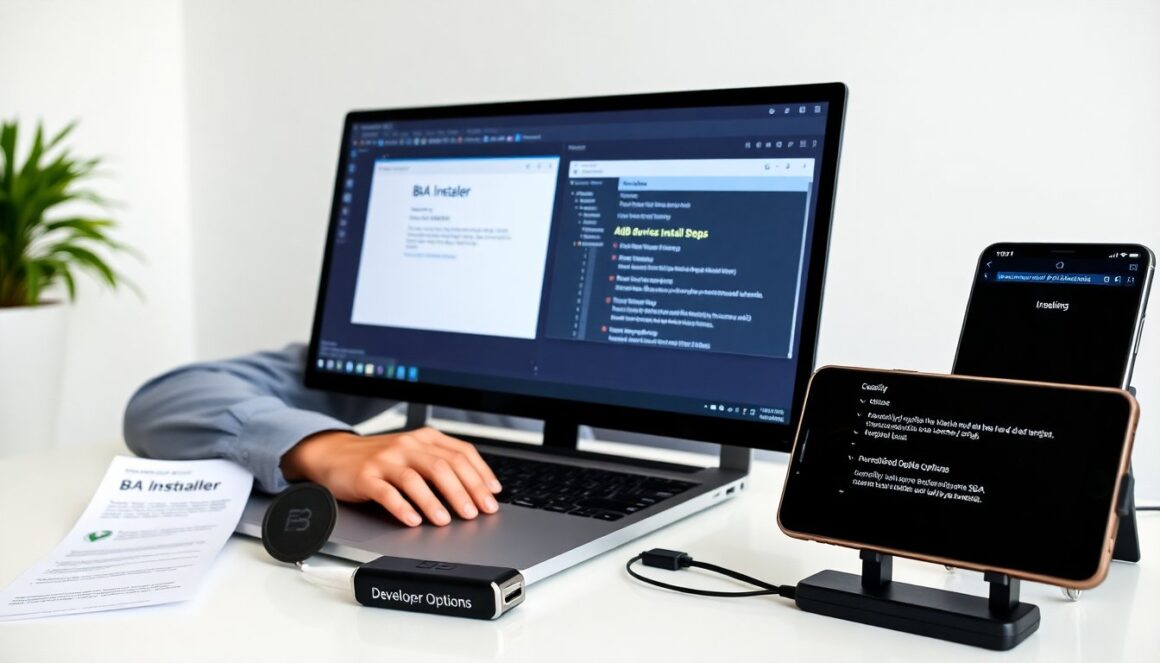
To download b4a on phonedeck, the user must prepare the device and the PC. The guide lists exact steps and checks. The reader will learn requirements, the install process, and quick fixes. The instructions use clear steps and simple language. The reader will follow the steps and get B4A running on PhoneDeck by the end.
Key Takeaways
- To download B4A on PhoneDeck, users must prepare by confirming system compatibility, installing Java 11 or later, and enabling USB debugging on their Android device.
- Follow a step-by-step process that includes downloading B4A installer, installing prerequisites, configuring PhoneDeck, and connecting B4A to PhoneDeck for seamless integration.
- Ensure the PhoneDeck server is up to date and firewall settings allow ADB connections for stable device recognition and communication.
- Troubleshoot common errors by checking USB connections, resolving ADB conflicts, and verifying SDK package installations to prevent build failures.
- Improve development speed by using USB 3.0 ports, quality cables, disabling battery optimization, and leveraging incremental builds in B4A.
- Maintain best practices by backing up project files, testing stable releases first, automating environment checks, and engaging with support forums when issues arise.
Compatibility, Requirements, And Preparations
PhoneDeck supports Windows or Linux hosts that run the PhoneDeck server. To download b4a on phonedeck, the user must confirm the host OS and PhoneDeck version. The user should check system RAM, available disk space, and USB driver support. B4A needs Java 11 or later and the Android SDK. The user should install Java on the host before downloading B4A files.
The user must enable USB debugging on the Android device. The user opens Settings, taps About phone, and taps Build number seven times. The user returns to Settings, opens Developer options, and turns on USB debugging. The user plugs the device to the host and accepts the debug authorization prompt.
The user should update PhoneDeck to the latest release before they download b4a on phonedeck. The user verifies PhoneDeck server status in the system tray on Windows or in the terminal on Linux. The user confirms that the host firewall allows the PhoneDeck server and the ADB connection. The user may install the OEM USB driver if Windows does not recognize the device.
The user downloads the latest B4A installer from the official source. The user keeps the download folder clear and uses a checksum to verify the file integrity. The user creates a restore point on Windows or a backup on Linux before making system changes. The user closes other development tools to avoid ADB conflicts. The user reads any release notes related to PhoneDeck and B4A compatibility.
Download And Install B4A On PhoneDeck — Step By Step
Step 1: Get files. The user opens the official B4A download page. The user selects the latest stable B4A package. The user saves the installer to the host machine. The user checks the file checksum.
Step 2: Install prerequisites. The user installs Java 11 or later. The user installs the Android SDK command-line tools. The user sets JAVA_HOME and ANDROID_HOME environment variables. The user restarts the host after these changes.
Step 3: Install B4A. The user runs the B4A installer on the host. The user follows the installer prompts. The user accepts the license and selects the install path. The user allows the installer to detect the Android SDK. The user completes the installation.
Step 4: Configure PhoneDeck. The user opens PhoneDeck on the host. The user ensures that PhoneDeck shows the connected device. The user selects the device in PhoneDeck. The user enables ADB over TCP if USB is not available.
Step 5: Connect B4A to PhoneDeck. The user opens B4A on the host. The user opens the B4A Tools menu and selects Configure Paths. The user points B4A to the Android SDK path. The user opens the Device chooser in B4A and selects the PhoneDeck device. The user clicks Connect. The user confirms that B4A lists the device and that ADB reports the device state.
Step 6: Test a build. The user creates a small test project in B4A. The user presses Run. The user watches the build log for errors. The user confirms the app installs and launches on the PhoneDeck device. The user verifies that logs appear in the B4A log window.
Throughout the process, the user may repeat steps if the device drops. The user should reboot the device and the host before retrying. The user should keep their PhoneDeck server updated while they download b4a on phonedeck. The user documents any settings that they change for future reference.
Common Errors, Troubleshooting, And Post‑Install Tips
Error: Device not listed. The user checks the USB cable and USB mode. The user enables USB debugging. The user restarts the PhoneDeck server. The user runs adb devices in a terminal to confirm the host sees the device.
Error: ADB conflict. The user closes other tools that use ADB. The user kills adb.exe or adb server and restarts it. The user ensures only one ADB instance runs. The user uses the same SDK path across tools.
Error: Build fails with SDK errors. The user installs missing SDK packages using sdkmanager. The user matches the compile SDK version in B4A with the installed SDK. The user updates platform tools and build tools.
Tip: Use stable releases. The user avoids alpha builds of PhoneDeck when they download b4a on phonedeck. The user tests new releases in a separate environment first. The user keeps backups of key project files.
Tip: Automate checks. The user writes a small script to verify Java, SDK, and adb versions. The script reduces manual errors and saves time. The user logs the output to a file for troubleshooting.
Tip: Improve speed. The user uses a direct USB 3.0 port and a quality cable. The user disables battery optimization for the connected device to prevent background throttling. The user uses incremental builds in B4A to reduce iteration time.
If problems persist, the user visits the B4A and PhoneDeck support forums. The user posts clear steps to reproduce the issue and includes logs. The user shares environment details, including OS version, B4A version, PhoneDeck version, Java version, and SDK path. The user often gets a solution within hours when they provide full details.
The user repeats critical checks after each major update. The user verifies that their workflow still works after they download b4a on phonedeck and after PhoneDeck updates.