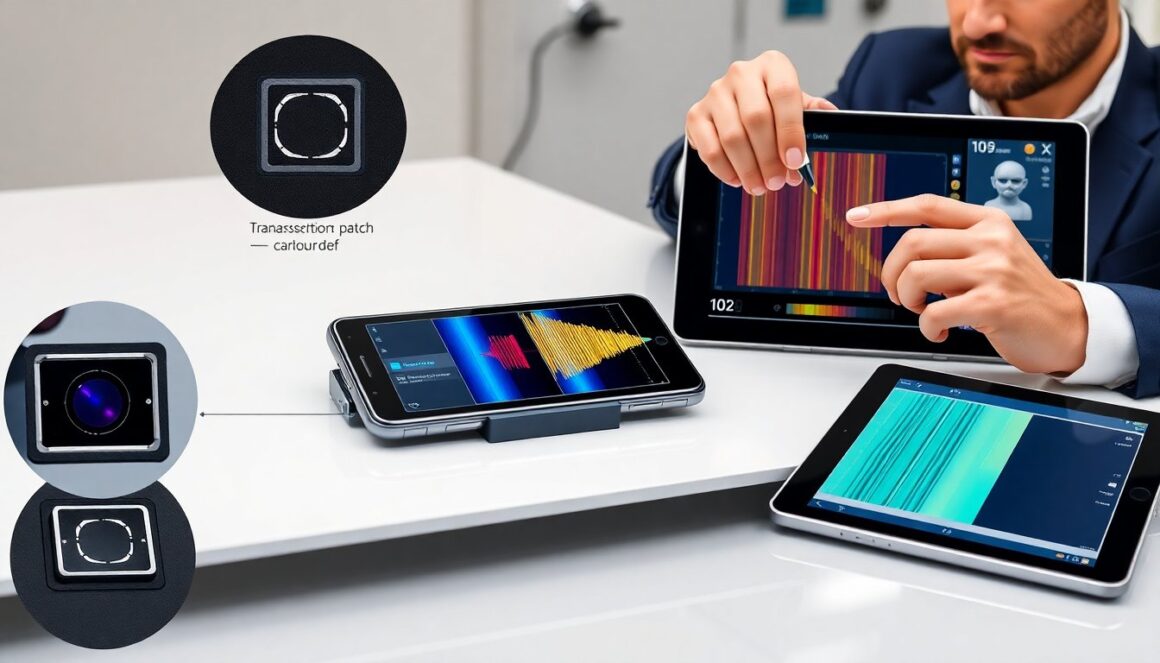
The samsungx1x ultra phondekc camera image processing spectrometer combines a phone camera, a deck module, and a spectrometer. It offers color analysis and material detection on the device. This guide explains what the system is, how the optics and spectrometer fit, how the image pipeline works, and where users can apply the features.
Key Takeaways
- The samsungx1x ultra phondekc camera image processing spectrometer combines a high-end phone camera with a detachable spectrometer deck for precise color analysis and material detection directly on the device.
- Samsung’s custom CMOS sensor and stabilized optics ensure low-light performance and accurate spectral measurements by integrating a transmission grating and calibration reference in the phone deck.
- The image processing pipeline fuses raw image data with spectral data using advanced calibration, sensor fusion, and AI enhancements for accurate color matching and material identification.
- On-device AI models reduce noise, upscale spectral bands, and apply color science standards, enabling the phone to output images and spectral data suitable for third-party application analysis.
- Practical uses include paint color matching, food freshness verification, and fabric dye identification, while maintaining user privacy by processing data locally without cloud dependency.
What The Samsung X1X Ultra Phone‑Deck Camera And Spectrometer Actually Are
The samsungx1x ultra phondekc camera image processing spectrometer bundles a high‑end phone camera with a detachable deck that holds a compact spectrometer. Samsung designed the phone sensor for high dynamic range and low noise. The deck adds a diffractive element and a slit that feeds light to the on‑device spectrometer. The spectrometer measures light across many narrow bands. The phone camera captures conventional RGB images. The device links spectral readings to pixels. The system lets the phone report precise color, paint match, and basic material fingerprints without cloud upload.
Camera Hardware, Optics, And Spectrometer Integration
Samsung placed a custom CMOS sensor in the X1X Ultra camera module. The sensor uses large pixels for low light. Samsung paired the sensor with stabilized optics and an adjustable aperture. The phone deck holds a micro‑optical path that splits light to the image sensor and the spectrometer. The spectrometer uses a transmission grating and linear sensor array. The design keeps alignment tight and minimizes stray light. Samsung integrated a calibration reference into the deck. The software reads the reference to correct drift and temperature effects on the spectrometer.
Image Processing Pipeline: From Raw Capture To Spectral Data
The pipeline mixes image data and spectral data in several stages. The pipeline starts with raw readout, moves through spectral extraction, and ends with fused output. The system timestamps and tags data at capture. The phone runs the pipeline on the main SoC and a dedicated ISP. The pipeline keeps a copy of raw sensor files for diagnostics. The phone compresses final outputs for sharing. The pipeline returns both image and spectral metadata together in standard formats.
Raw Sensor Readout And Preprocessing
The camera reads raw pixels and writes them to memory. The ISP subtracts dark current and corrects fixed pattern noise. The software applies lens shading correction and linearizes sensor response. The spectrometer sensor also outputs raw counts per pixel. The pipeline converts those counts to intensity values using the onboard reference. The phone stores the calibrated raw arrays for later processing. The system tags images with exposure, temperature, and deck ID for repeatable processing.
Spectral Extraction, Calibration, And Sensor Fusion
The software extracts spectra from the linear array using windowed integration. The pipeline corrects wavelength shift using the embedded reference lines. The phone applies a radiometric calibration to convert counts to reflectance. The system maps spectra to image pixels by using the deck geometry and capture metadata. The fusion module aligns spectral points with the corresponding camera pixels. The phone uses the fused data to compute accurate color and to detect specific materials by matching known spectral signatures stored onboard.
AI‑Based Enhancement, Color Science, And Output Formats
The phone runs AI models to reduce noise and to upsample spectral bands. The models run on the NPU and on the ISP. The device applies a trained color model to match CIE standards. The software outputs images, spectral CSV, and JSON metadata. The phone can save a calibrated spectral cube per capture. The AI also flags suspect readings and suggests re‑capture. The outputs let third‑party apps run analysis without special hardware access.
Practical Use Cases, Limitations, And Privacy Considerations
The samsungx1x ultra phondekc camera image processing spectrometer helps users check paint color, verify food freshness, and identify fabric dyes. Professionals can use it for quick onsite checks and simple quality control. The device cannot replace lab‑grade spectrometers for precise pharmaceutical analysis. The spectrometer has limited spectral resolution and a narrow collection aperture. The phone stores spectral data locally by default. Samsung gives users controls to share or delete data. The company processes most analysis on device to limit cloud transfer and to protect user privacy.